


Window Coverings and Home Security


What Every Homeowner Should Know
Your windows let in light, frame your views, and give your home its character. But they’re also one of the most overlooked vulnerabilities in home security. The good news? The right window coverings and a few smart upgrades can make a dramatic difference in keeping your home safer, without sacrificing style.
Most people focus on door locks when thinking about home security, but windows deserve equal attention. First-floor windows, especially those on the side or back of a house, are among the most common entry points for break-ins. Burglars are opportunistic they look for easy targets, and a window that offers both access and concealment is exactly what they’re looking for.
Beyond forced entry, there’s another risk that’s easy to overlook: visibility. When your valuables electronics, jewelry, bags are visible through uncovered windows, you’re essentially advertising what’s worth taking.
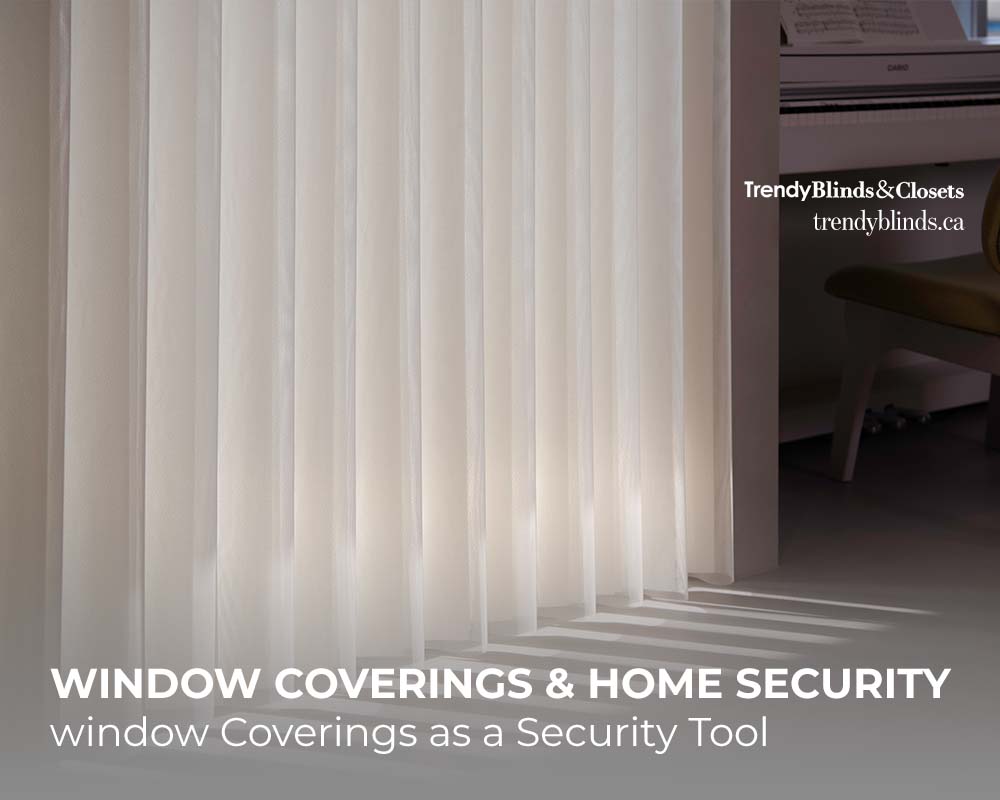
 Window Coverings as a Security Tool
 Window Coverings as a Security Tool
It might seem like window treatments are purely decorative, but they play a real role in home security. Here’s how:
- Light Filtering Privacy Shades. Natural light in the home is important for health and comfort. The good news is that there are many window shades products available that lets natural light into the house while simultaneously providing full day and night privacy. While products like roller shades, zebra shades, horizontal and vertical sheer shades offer different functional and aesthetic approaches to covering your windows, all four categories of shades provide visual privacy and thus a level of security.
- Blackout Shades and Drapery. For nighttime privacy, blackout shades and drapery are highly effective. When interior lights are on, standard drapery sheers or solar shades actually make you more visible from outside. Blackout shades and blackout drapery eliminate that problem entirely, and they have the added bonus of improving sleep quality and reducing energy costs.
- Shutters. When shutter louvers are tilted open, they allow outside view and natural light. However, visual privacy could be compromised. When specifying shutters, it is recommended to segment the louvers into upper and lower groups at a minimum with the dividing line being at just below eye level or higher. This allows the user to tilt the upper louver section to allow natural light and outside viewing while providing privacy from the shoulder down at a minimum.
- Cellular and Honeycomb Shades. These offer a subtler approach: good daytime privacy combined with strong insulation. They won’t stop a determined intruder on their own, but they add to a layered security approach while reducing your energy bill.
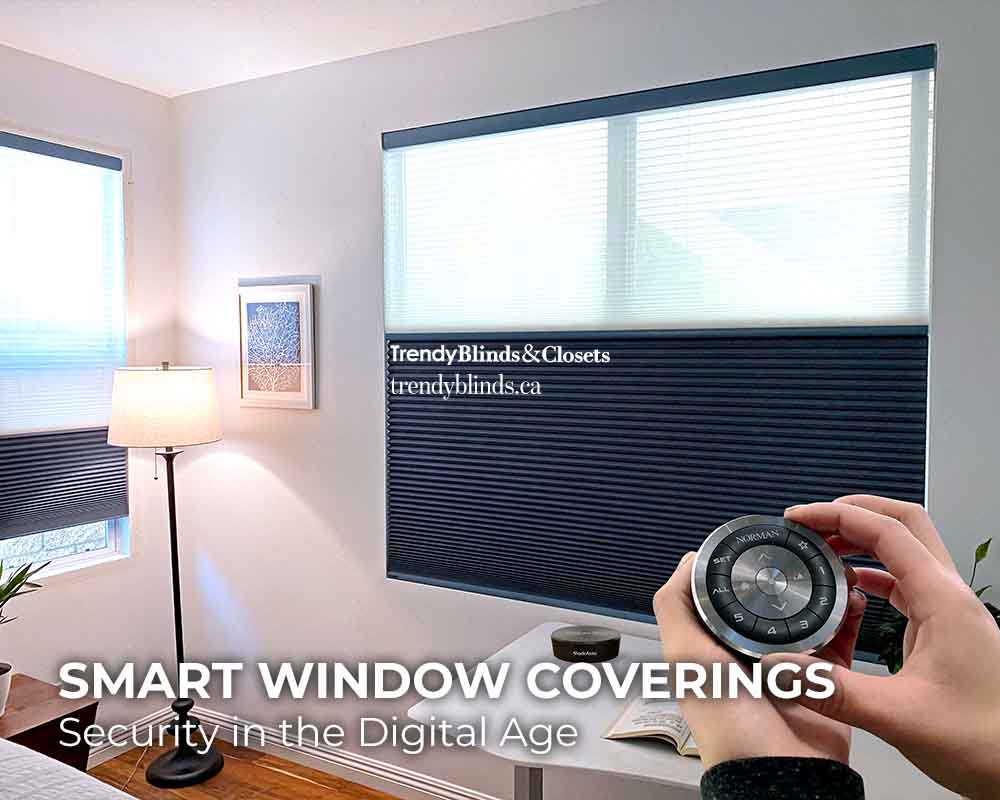
Smart Window Coverings: Security in the Digital Age
Technology has transformed what window treatments can do. Automated shades can be programmed to open and close on a schedule or even at random to simulate occupancy when you’re away. This “lived-in” appearance is one of the most effective deterrents for opportunistic burglars.
Smart shades can also integrate with home security systems. If a camera detects suspicious activity near a window, it can automatically trigger the shades to close, removing visibility into your home in real time.
Beyond the Coverings: A Layered Approach
Window coverings work best as part of a broader security strategy. A few additional measuresthat complement your treatments:
- Upgrade your window locks. Many standard window latches are easy to bypass. Aftermarket locks, pin locks, and key-operated locks are inexpensive and significantly more secure.
- Add glass-break or entry sensors. These connect to your alarm system and trigger immediately if a window is opened or the glass is broken.
- Install motion-activated lighting. Burglars rely on concealment. Exterior lights that turn on when triggered eliminate hiding spots and draw attention to anyone approaching your windows.
- Keep landscaping trimmed. Overgrown bushes near windows give intruders cover. Keeping shrubs low and tidy removes that advantage.
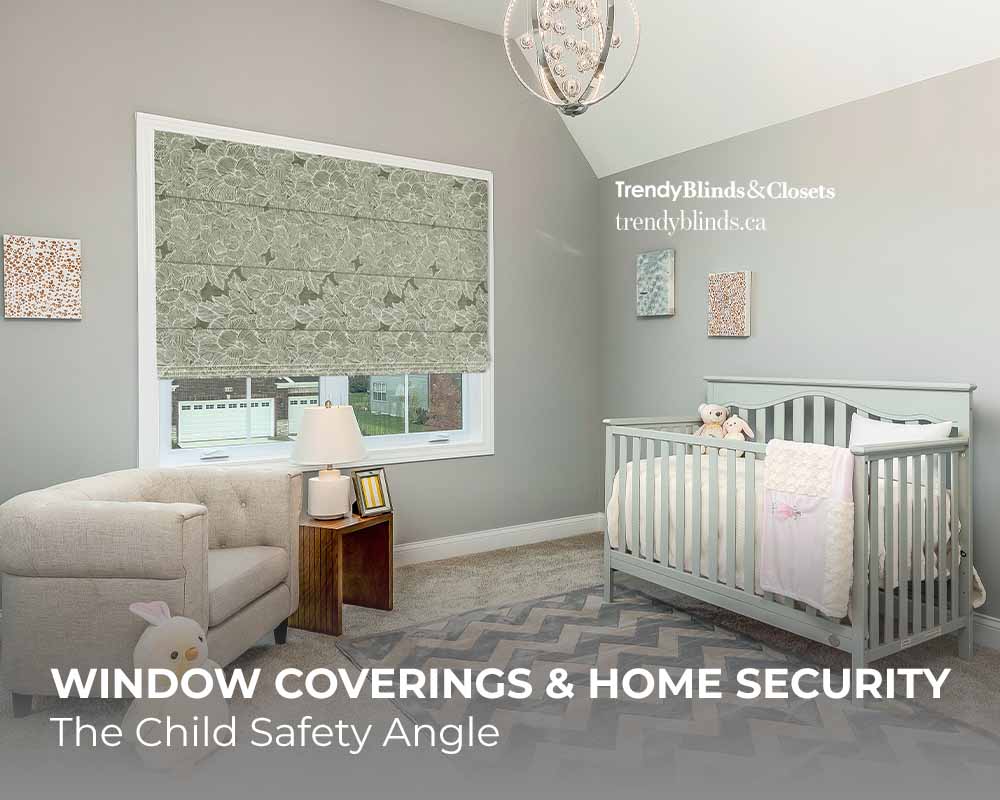
The Child Safety Angle
Security isn’t only about intruders. Window covering safety for children is a separate but equally important concern. New Health Canada standards have restricted most corded window coverings, citing strangulation risks. If you have young children or pets at home, cordless systems are now both the safer and the increasingly standard choice and they’re widely available at all price points.
In Conclusion
No single product provides total security, but layering privacy, physical deterrents, and smart technology makes your home a much harder target. And that, ultimately, is the goal: not to build a fortress, but to be enough of an obstacle that an opportunistic burglar moves on.
Finally, window security doesn’t have to be expensive or complicated. Start with what you have, close the obvious gaps, and build from there.