


Horizontal Sheer Shades


Horizontal sheer shades (often called sheer shadings or with brand names like Silhouette shades or Overture shades) are a premium window treatment that combines the softness of sheers with the light control of blinds.
Below we will first explain how horizontal sheer shades are constructed and how they function. Then we will list out the top 10 advantages of these shades.
What Are Horizontal Sheer Shades and How they Work?
They are made of:
- Two layers of sheer fabric
- Horizontal fabric vanes suspended between them with a S-shape rotated 90 degrees
When open, the vanes appear to “float” between sheer panels. When closed, the vanes tilt like blinds to control light. They look like a hybrid of sheer curtains and venetian blinds but with a cleaner, more modern look.
 They operate in two ways:
Tilt Function
- Vanes rotate open/closed
- Controls light and privacy
- Similar to blinds
Raise/Lower Function
- Shade lifts fully into headrail
- Clears the entire window
Most high-end models offer:
- Cordless operation
- Wand control
- Motorization (very popular in luxury homes)
Light Control & Privacy
Open Position
- Soft, diffused natural light;
- Maintains outside view;
- Reduces glare.
Closed Position
- Blocks direct view;
- Still allows soft filtered light;
- Not full blackout.
Note that for Reduce Light entry or Blackout you need a Room-darkening version or a separate blackout roller shade behind it
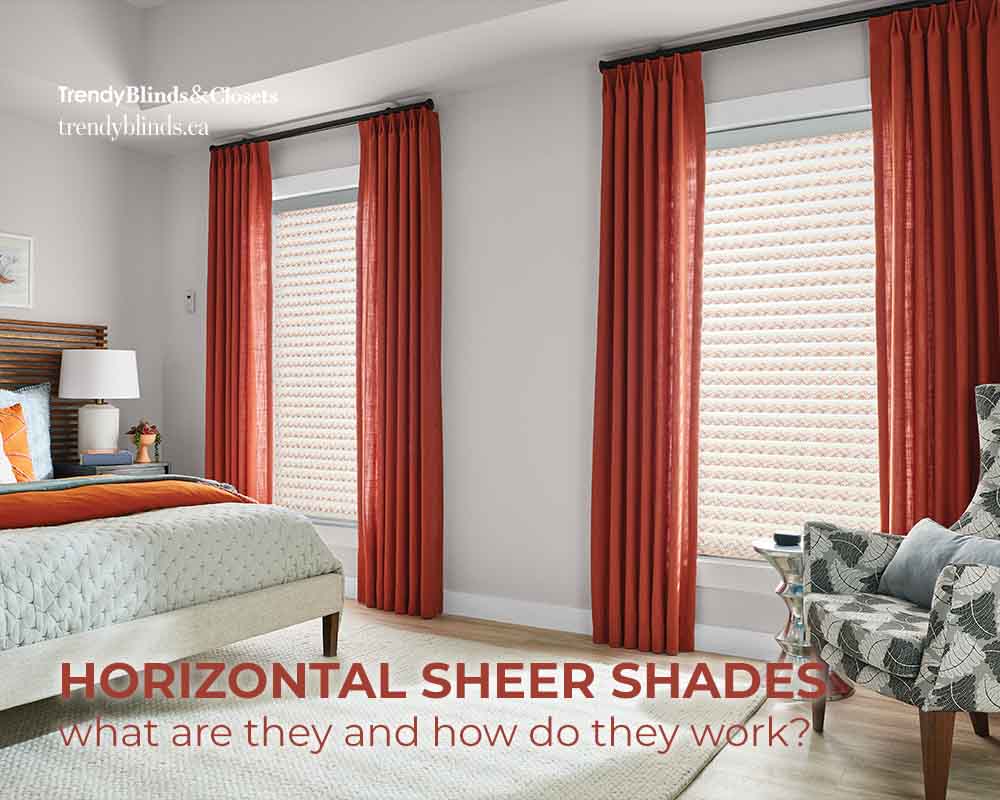
Top 10 Advantages of Horizontal Sheer Shades for Windows
Here are the key advantages of horizontal sheer shades for windows, especially in high-end residential settings:
1.Elegant Soft Light Control. Horizontal sheer shades filter sunlight instead of blocking it harshly. This gives:
- a soft, pleasant glow in the room
- reduced glare without full darkness
- better visual comfort during daytime
They strike a balance between blinds and draperies.
 2. Maintain Outside Views. When vanes are open, sheer shades let you:
- see through to the outdoors;
- enjoy natural light;
- retain a sense of openness.
This is something traditional blinds can’t match, especially when fully open but still controlling stray light.
3. Clean & Refined Aesthetic. They look sophisticated and modern and are popular in:
- contemporary interiors;
- transitional homes;
- spaces with custom millwork.
Because the vanes are sandwiched between sheer fabric panels, you get a sleek, uncluttered appearance without exposed cords or bulky materials.
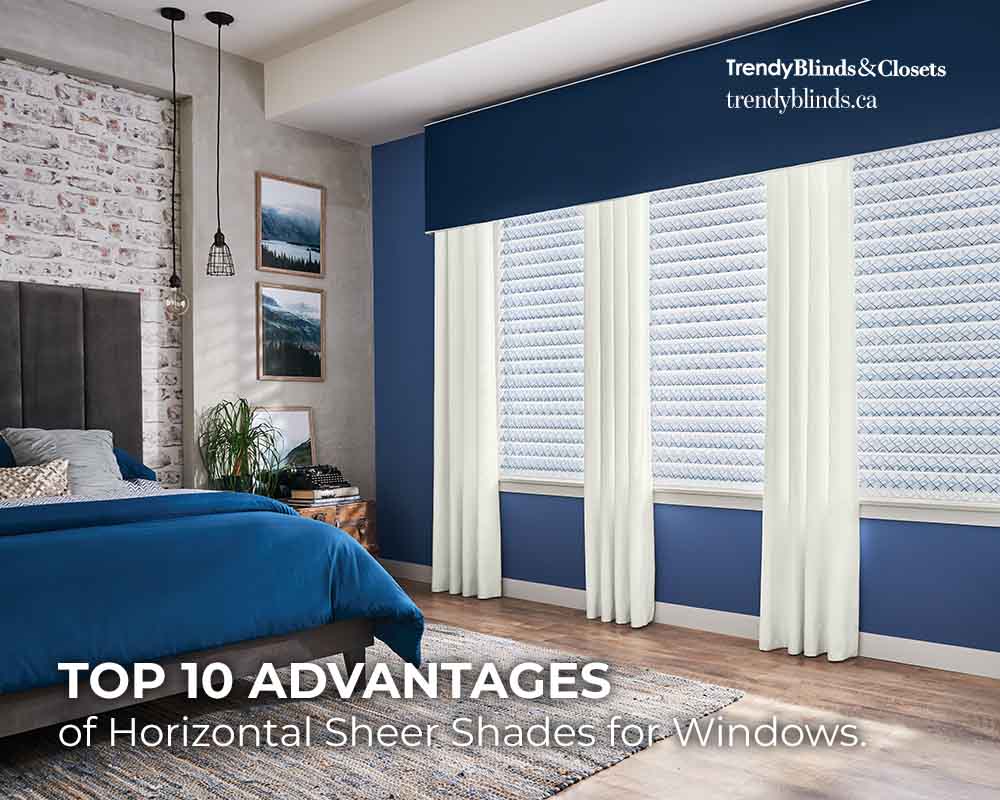 4. Flexible Light & Privacy Control. Horizontal sheer shades offer three core positions:
Position What Happens
Raised Clear full opening, max view + light
Open vanes Light diffusion + partial visibility
Closed vanes More privacy + reduced direct light
This flexibility is great for areas like:
- living rooms
- bedrooms
- home offices

5. Better UV Protection Than Blinds. The sheer fabric gently filters UV rays, which:
- reduces fading on furniture & floors;
- protects interior finishes.
While not 100% UV-blocking like blackout shades, they still help preserve interiors.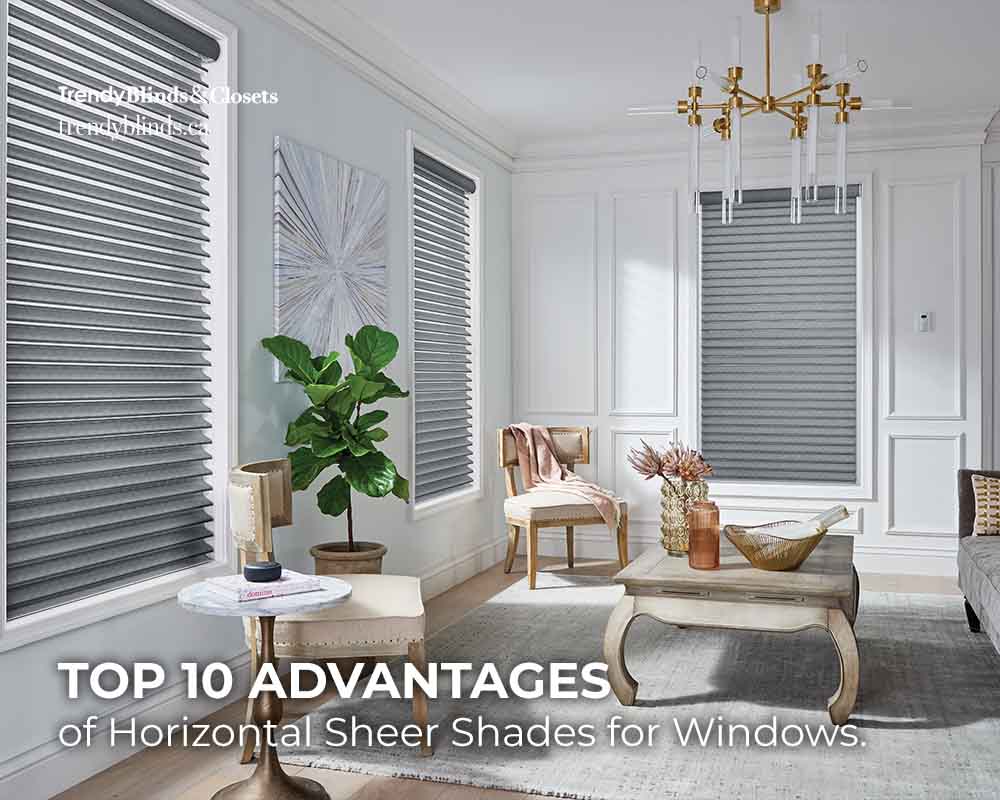
6. Easier, Cleaner Look (Less Visual Clutter). Unlike horizontal blinds with slats and cords:
- sheer shades hide hardware;
- no visible strings or ladders;
- minimal stacking at the top as the vanes complete roll up into the cassette when open.
This creates a clean architectural line at the window.
7. Great with Layered Window Treatments. Horizontal sheer shades are often paired with:
- blackout roller shades (for bedrooms);
- drapery panels (for design impact);
- motorized smart shading layers.
This layered approach gives design versatility, complete light control and enhanced insulation.
8. Smooth, Quiet Operation. Especially in premium models:
- cordless lifting systems;
- optional motorization;
- gentle tilt mechanisms for quiet operation.
9. Highly Compatible with Motorization. Horizontal sheer shades work very well with smart controls:
- Smart Home system integration;
- app / voice integration;
- timed shading schedules.
This adds convenience and helps protect interiors automatically.
10. Softer Acoustics Than Hard Blinds. Fabric panels help slightly with:
- absorbing sound;
- reducing echo;
- making rooms feel cozier.
Hard blinds don’t offer this benefit.
In Summary
Horizontal sheer shades deliver:
✔ Elegant, filtered natural light
✔ View preservation
✔ Refined, minimal aesthetics
✔ Good privacy and glare control
✔ Excellent upgrade for luxury homes
Horizontal Sheer Shades Frequently Asked Questions
BASICS
Triple/Horizontal Sheer Shades — also called horizontal sheer shades, sheer shadings, or by brand names like Silhouette Shades — are a type of window covering that features horizontal fabric vanes suspended between two sheer fabric panels. The vanes can be rotated open or closed, much like traditional blinds, while the sheer panels remain in place, creating a soft, layered look that diffuses light beautifully.
Traditional blinds use hard slats (wood, aluminum, or vinyl) with no fabric facing. Regular shades are a single layer of fabric that only raises or lowers. Triple Shades combine both: the adjustable horizontal vanes give you light and privacy control like blinds, while the sheer fabric panels on either side soften the look and reduce glare, resulting in a significant aesthetic upgrade over either option alone.
The vanes are typically made from a soft polyester or polyester-blend fabric, which gives them a gentle, dimensional appearance. The surrounding sheer panels are usually a lightweight woven fabric. Some premium lines offer vanes in heavier opacity fabrics for enhanced privacy or blackout functionality.
LIGHT & PRIVACY
Privacy depends on the vane position. When the vanes are fully open (horizontal), the sheer panels let in beautiful diffused light but provide minimal privacy (passersby can see silhouettes). When vanes are rotated closed (facing downward), the layered sheers and vanes block the view from outside quite effectively during daylight hours. At night with interior lights on, even closed vanes may allow some visibility from outside, so a privacy liner is recommended for bedrooms or street-facing windows.
Standard Triple Shades are not blackout; they are designed for light diffusion, not light elimination. However, many manufacturers offer a blackout liner that can be paired with the shade, or a room-darkening fabric option for the vanes. If complete darkness is your goal (nurseries, home theatres), look for a paired blackout cellular shade or a separate blackout liner system that mounts alongside.
Yes, most Triple Shades filter a significant percentage of UV radiation even in the open-vane position. The sheer panels alone can block up to 88% of UV rays, depending on the fabric. This helps protect furniture, flooring, and artwork from fading without sacrificing natural light in the room.
OPERATION & FEATURES
Triple Shades are available in several operating systems: corded lift (traditional pull cord), cordless lift (push-button mechanism at the bottom rail which is child and pet safe), continuous loop cord (a looped chain for easy one-handed operation), and motorized (battery-powered — typically lasting about a year on a charge — or hardwired; compatible with smart home systems like Alexa, Google Home, or Apple HomeKit, and can be grouped into smart home routines). Motorized is especially popular for large or hard-to-reach windows.
Some manufacturers offer a top-down/bottom-up (TDBU) configuration, which allows you to lower the shade from the top or raise it from the bottom — giving you privacy at eye level while still allowing light in from the top. This is a particularly useful feature for bathroom windows or rooms at street level. Note that TDBU does add cost and may limit fabric choices.
SIZING & INSTALLATION
Inside mount (fitted within the window frame) gives a clean, built-in look and is generally preferred for Triple Shades. You need at least 2.5 inches of depth in the frame to accommodate the headrail. Outside mount (above and beyond the frame) is ideal when the window is shallow, when you want to make a window appear larger, or when you want maximum light blockage at the edges. Outside mount also suits windows with obstructions like handles or cranks inside the frame.
For inside mount, measure the width at three points (top, middle, bottom) and use the narrowest measurement. Measure height on the left, center, and right — use the longest. The manufacturer will typically deduct a small amount (usually 1/4") for clearance. For outside mount, add 2 inches to each side of the window width and 3 to 5 inches above the frame. Always measure each window individually as walls are rarely perfectly square.
Yes, most Triple Shades come with a mounting bracket system designed for DIY installation. You'll need a drill, a level, and a screwdriver. The headrail clicks into the brackets once mounted. Motorized versions with hardwiring may require an electrician. Always ensure brackets are anchored into the window frame or wall studs (not just drywall) for heavier shades. However, professional installation, which includes a check measurement, almost always results in a better final result.
CARE & LONGEVITY
For routine maintenance, use a soft duster, feather duster, or the brush attachment of a vacuum on low suction. Gently run it along the vanes while they are in the open (horizontal) position. For spot cleaning, use a lightly dampened, lint-free white cloth and dab (do not rub) the stain with cool water and mild soap. Avoid soaking the fabric or using harsh chemical cleaners. Most Triple Shades are not machine washable; ultrasonic cleaning by a professional blind cleaner is an option for deep cleaning.
With proper care, Triple Shades typically last 7–15 years. The sheer fabric is the most vulnerable component — prolonged direct sun exposure can cause yellowing or weakening over time. South- or west-facing windows benefit most from UV-protective coatings or a secondary layer. The mechanical components (lift cord, clutch, or motor) may need service or replacement before the fabric shows wear, especially in high-use windows.
This depends entirely on the manufacturer. Some brands offer a fabric replacement program where the headrail and hardware are retained, and only the fabric panel is replaced — saving high costs. Others treat the shade as a single unit. It is worth asking your retailer about a restringing or fabric swap service before replacing the entire product.
COST & VALUE
Triple/Horizontal Sheer Shades sit in the premium window treatment category. Expect to pay $300+ per window for a standard corded or cordless shade, and $600–$900+ per window for motorized versions, depending on size and brand. Graber offers a similar look at a more accessible price point than premium branded originals. Professional installation is an additional cost.
For rooms where ambiance, light quality, and aesthetics matter, such as living rooms, dining rooms, primary bedrooms, most homeowners find them worth the premium. The soft, filtered light they produce is simply not achievable with standard blinds or basic roller shades. For utilitarian spaces like laundry rooms, garages, or rental properties, more economical options make better sense. Their durability also means cost-per-year is more reasonable than the upfront price suggests.